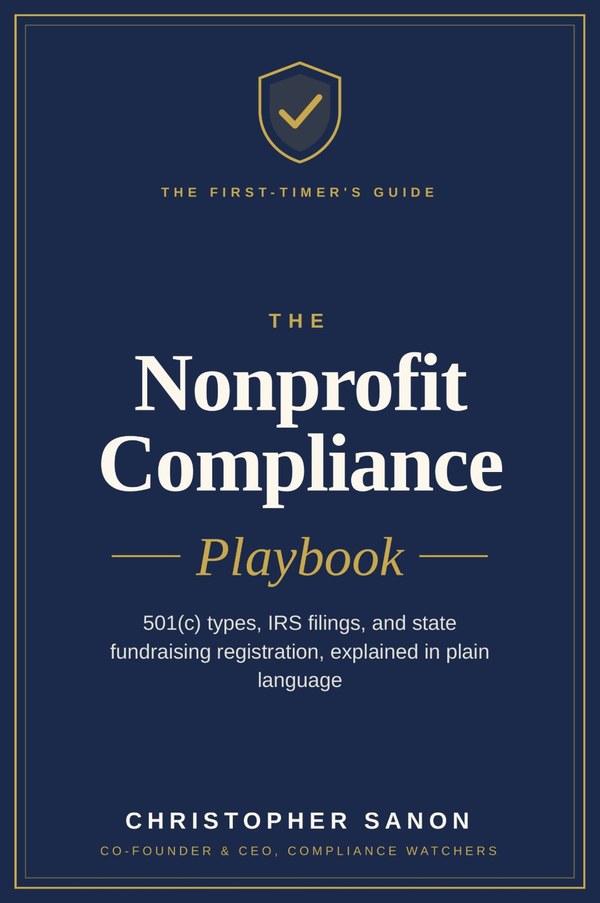
The Nonprofit Compliance Playbook
501(c) types, IRS filings, and state fundraising registration, explained in plain language
Starting a nonprofit is the easy part. Staying in good standing is where first-timers get caught.
Tax-exempt status does not let you fundraise in every state. Missed filings, lapsed registrations and unsigned policies can cost an organization its status, its donors' trust and its reputation. This book gives you a clear map.
First edition, 2026 · 150 pages · 57 chapters · 28 appendices of worksheets & templates
What you'll learn
- Choose the right 501(c) type for your mission
- Apply to the IRS and file your Form 990 on time
- Register to fundraise in every state that requires it
- Build bylaws, policies and records that hold up to scrutiny
- Respond calmly when a notice arrives
Every chapter ends with a checklist, and the workbook section gives you ready-to-use worksheets, calendars and templates, so you can start today.
Who it's for
- Founders starting a nonprofit and deciding which type of tax-exempt organization to form
- New executive directors and administrators who inherited a compliance calendar they don't yet understand
- Board members who sign filings and want to know what they are signing
- Consultants, bookkeepers and volunteers who support nonprofits and need a reliable map
The idea that organizes everything
Nonprofit compliance happens on three separate levels, and most first-timers only know about one of them:
- The state where you incorporated. Where your organization legally exists: corporate filings, annual reports and your registered agent.
- The IRS. Where tax exemption comes from: which 501(c) type you are, what you file each year, and what can cost you your status.
- Every state where you ask for money. Charitable solicitation registration — the level that surprises organizations most, because federal tax exemption does not grant permission to fundraise in any state.
Inside the book
Part 1: The Landscape
- What “501(c)” Actually Means
- 501(c)(3): Charities, and Public vs. Private
- The Other 501(c) Types First-Timers Should Know
- The Rest of the 501(c) Family: A Quick Reference
- Choosing the Right Type
Part 2: Getting Recognized
- Building the Foundation
- Applying to the IRS
- Common Application Mistakes
Part 3: Staying Compliant
- Annual IRS Filings
- Public Support and Keeping Public Charity Status
- Lobbying and Political Activity
- Private Benefit, Inurement, and Excess Benefit
- Unrelated Business Income Tax (UBIT)
- Donor Rules
- Revocation and Reinstatement
Part 4: Charitable Solicitation Registration
- Why You Need More Than IRS Recognition
- Who Must Register, and When
- Which States Require It
- Exemptions
- The Registration Package
- Annual Renewals and Financial Requirements
- Professional Fundraisers, Solicitors, and Commercial Co-Venturers
- Online and Multi-State Fundraising
- Penalties and Fixing Mistakes
- Building a Multi-State Compliance System
Part 5: Systems
- Building Your Compliance Calendar
- Recordkeeping and Board Minutes
- When to Hire Help
Part 6: Going Deeper
- Reading Your Form 990, Part by Part
- Board Governance Basics
- Employees, Volunteers, and Contractors
- State and Local Taxes
- Events, Raffles, Sponsorships, and Online Giving
- Grants and Government Funding
- Insurance, Contracts, and Risk
- Fiscal Sponsorship, Changes, and Closing Down
Part 7: Worked Examples and Your First Year
- The Fundraiser That Went Viral
- The Late Return and the Letter
- The Founder's Paycheck
- The Thrift Shop and the Newsletter
- Your First 12 Months, Step by Step
Part 8: Building Strong Foundations
- Bylaws, Section by Section
- Articles of Incorporation and the Purpose Clause
- Writing the Narrative for Your IRS Application
- Budgets and Financial Controls
- Bookkeeping and Financial Statements
- Gifts, Receipts and Noncash Donations
- Recruiting and Onboarding Board Members
- The Policies Every Nonprofit Should Have
- Records, Retention and Document Security
- Common Mistakes and Warning Signs
- Working With Professionals
- Special Situations
- Your Website, Social Media and Online Giving
- Building a Culture of Compliance
- What to Do When a Notice Arrives
- Leadership Transitions
Appendices: the workbook
- Annual deadline calendar
- Master compliance checklist
- “Do I need to register?” worksheet
- State registration quick-reference and detail sheets
- Sample conflict of interest policy
- Sample donor acknowledgment letters
- Board meeting agenda and minutes template
- Form 990 preparation checklist
- Document retention schedule
- Twelve-month compliance planner
- Quarterly compliance dashboard
- 90-day action plan
- Glossary and frequently asked questions
- Where to verify: official sources
Free guides that go with the book
Questions about the book
Who is The Nonprofit Compliance Playbook for?
First-time nonprofit founders, new executive directors and administrators, board members who sign filings, and the consultants, bookkeepers and volunteers who support them. No legal or accounting background is assumed.
What does the book cover?
Choosing a 501(c) type, applying to the IRS for tax exemption, annual Form 990 filings, keeping public charity status, lobbying and political activity limits, charitable solicitation registration in the states that require it, and the calendars, records and policies that keep an organization in good standing.
Does it explain charitable solicitation registration?
Yes. Part 4 (ten chapters) covers why IRS recognition isn't enough to fundraise, who must register and when, which states require it, exemptions, the registration package, annual renewals, professional fundraisers, online and multi-state fundraising, penalties, and building a multi-state compliance system.
Does it include templates and checklists?
Yes. Every chapter ends with a checklist, and the appendices include an annual deadline calendar, a “Do I need to register?” worksheet, a sample conflict of interest policy, donor acknowledgment letters, board minutes templates, a Form 990 preparation checklist and a document retention schedule.
Where can I buy the book?
The Nonprofit Compliance Playbook is available on Amazon. The first edition was published in 2026 and runs 150 pages across 57 chapters.
Rather have a specialist handle it? We'll review where your organization stands.
Get a Compliance Review →Free, no obligation. A specialist reviews your situation and tells you what's missing.